
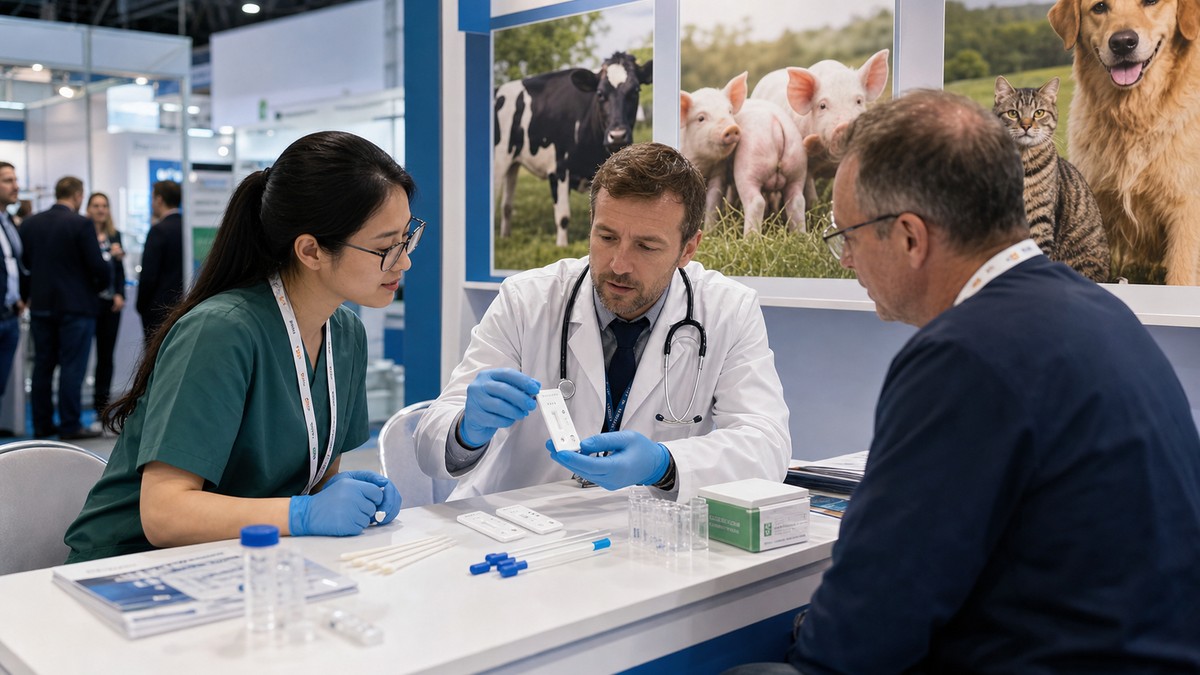
Real industry background
WOAH has long warned that antimicrobial resistance affects animal health, food security and public health. For farms and veterinary clinics, responsible use of antimicrobials starts with clearer pathogen information, not routine empirical treatment without evidence.
How diagnostics support stewardship
Rapid antigen tests and on-site screening can help veterinarians triage suspected cases, decide whether to isolate animals, retest, send samples for laboratory confirmation or choose a treatment pathway. They do not replace culture or susceptibility testing, but they move decisions earlier.
What buyers review
Customers assess whether sampling is simple, results are easy to read, products support herd or clinic screening, and performance remains stable between lots. Distributors also need training materials and clear technical explanations.
Safheal perspective
Veterinary diagnostics must fit real workflows. Safheal should present product combinations, IFU clarity, sample types and time-to-result so customers can see how tests enter routine clinic or farm management.
Veterinary rapid testing should support evidence-based diagnosis, isolation, retesting and antimicrobial stewardship, not fear-based marketing.